

When service systems and consumer protection align, trust strengthens and growth becomes sustainable. In competitive markets like Lagos, structured service governance is no longer optional — it is strategic infrastructure.
Nigeria’s consumer protection framework has teeth — the Federal Competition and Consumer Protection Commission (FCCPC) has been actively enforcing consumer law against major companies, and enforcement actions (including high-value fines) show regulators are serious about protecting consumers. Meta was fined $220 million for violating consumer and data laws.
Why service culture and consumer rights are two sides of the same coin
Service culture is the daily behavior, habits and systems that determine how staff treat customers. Consumer rights protection is the legal and regulatory backbone that ensures customers are treated fairly. When a business invests in both, the result is consistent service that meets expectations and avoids regulatory risk.
Data shows that customers vote with their feet: poor experiences drive people away. Global benchmarks indicate a high churn risk when service fails — up to three quarters of customers will switch providers after repeated bad experiences. That’s a revenue problem and a brand problem at once.
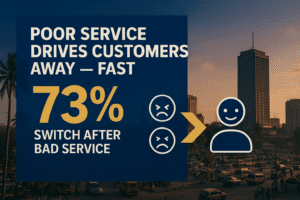
“Up to 73% of customers will switch after repeated poor experiences — so poor service is both a customer issue and a regulatory risk.”
The Nigerian context: regulators are watching, and consequences are real
Recent enforcement in Nigeria underlines the point: national regulators have pursued and fined large tech platforms and are litigating high-profile corporate cases where consumer interests are at stake. These developments show that consumer protection in Nigeria is active and visible — businesses operating in Lagos must be prepared both to serve better and to comply.
Regulatory enforcement is no longer abstract — it hits wallets and reputation.
Three practical intersections: where service culture reduces consumer risk.
-
Clear promises + consistent delivery.
When teams are trained to set realistic expectations and then meet them, customers aren’t left feeling cheated — and that reduces complaints and regulatory attention. -
Empowered frontline staff.
If staff are trained and authorized to resolve issues quickly, minor problems don’t turn into formal complaints. That protects customers and reduces escalations. -
Measurement + action.
Systematic feedback (NPS, surveys, complaint tracking) surfaces issues early. Businesses that act on feedback improve experiences and reduce churn — and they show regulators they take consumer protection seriously. Research links improved CX to faster revenue growth and better retention.
“Measure, act, repeat — companies that operationalize feedback, protect customers and strengthen their business.”
Evidence: CX lifts growth — and avoids costly complaints
Companies that lead in customer experience tend to outgrow peers: CX leaders grow revenue faster because satisfied customers spend more and stay longer. Conversely, poor service often results in silent churn: many unhappy customers never complain — they just leave. That invisible friction costs businesses in Lagos the most, because word of mouth and social media amplify local reputational damage.
Leading CX companies grow faster — multiple industry reports link CX leadership to outsized revenue growth.
Practical steps Organizations can start this month
-
Run a Service Culture Assessment.
Benchmark where your customer experience breaks down and identify regulatory risk areas (returns, fees, data handling, billing). -
Train and empower the frontline.
Teach teams to de-escalate, resolve, and record complaints. Give staff clear authority levels and scripts for common scenarios. -
Make rights visible in every customer touchpoint.
Ensure customers can easily see refund and complaint policies; make forms and processes simple and mobile-friendly. -
Track complaints as learning, not noise.
Use complaint data to prevent recurrence — then report improvements internally and externally when needed. -
Engage with regulators proactively.
Keep documentation of remediation steps and be transparent if problems surface — that posture reduces fines and reputational downside. Visit FCCPC library
In Lagos, strong service culture is both a growth strategy and a compliance shield. If you want to reduce complaints, increase loyalty, and protect your brand from regulatory fallout, start with an assessment, train your frontline, and make consumer rights part of your everyday operating rhythm.

If you’d like we can:
-
Draft a one-page Service Culture + Consumer Rights Assessment template you can run with your teams; or
-
Build a short slide deck you can use to brief leadership on the connection between CX, churn, and regulatory risk; or
- Would you like FCCPA certified training for your staff and organization?
Which would help you most right now? Send us an email via connect.us@servicecultureacademy.org.
